








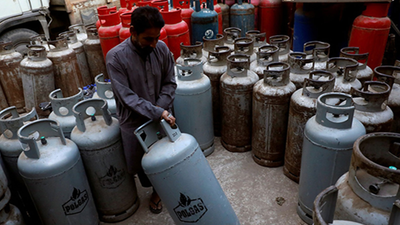
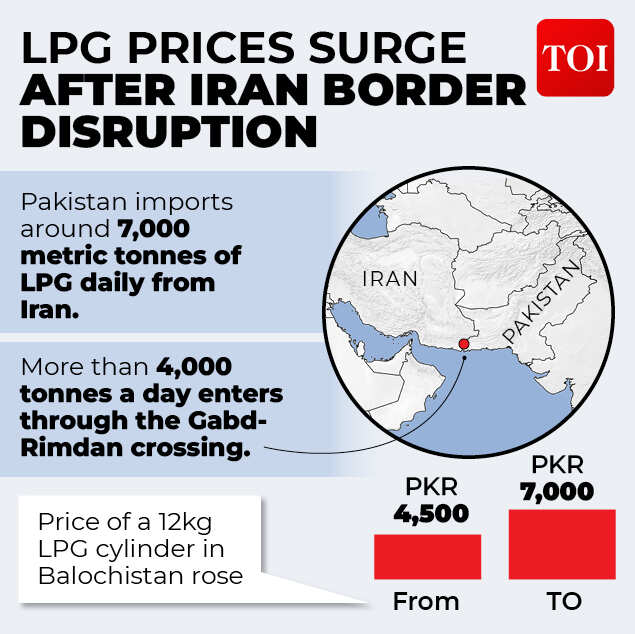
A domestic LPG cylinder that cost around PKR 4,500 in Pakistan’s Balochistan province has shot up to nearly PKR 7,000. In some parts of the country, LPG prices have reached PKR 600 per kg, more than double the official rate. With supplies disrupted following the closure of key border crossings with Iran, households are struggling to find affordable cooking fuel. Some have even begun turning to wood and coal.But the shortage has exposed a much bigger problem. Pakistan’s domestic natural gas production has been declining, its dependence on expensive imports has grown, and debts across its gas sector have reached trillions of rupees. Yet, even as households struggle with shortages, the country has also been dealing with surplus imported LNG that it cannot easily use or sell.
A supply shock ahead of winter
On October 21, 2026, Dawn reported that LPG prices had climbed to as much as PKR 600 per kg in hilly areas and PKR 500 per kg in Punjab and Khyber Pakhtunkhwa, even though the Oil and Gas Regulatory Authority (OGRA) had fixed the official October rate at around PKR 279 per kg. The regulator’s notified price for an 11.8kg domestic cylinder was PKR 3,296.23.
Pakistan faces shortages after Iran war disruption
The disruption has since intensified. Reuters reported on October 23 that the closure of the Gabd-Rimdan and Taftan crossings with Iran had halted LPG imports, leaving tankers stranded and worsening shortages.Traders said Pakistan imported about 7,000 metric tonnes of LPG a day from Iran. In Balochistan, the price of a 12kg cylinder had risen from around PKR 4,500 to PKR 7,000. Pakistan cited security and anti-smuggling concerns for the border closure, while Iran pointed to technical issues. The two sides were consulting on resuming trade.The pressure is also visible in Rawalpindi and Islamabad. Dawn reported on October 26 that households facing limited piped-gas supply and soaring LPG prices had begun turning to wood and coal for cooking. Residents reported receiving natural gas for only about six hours a day, while LPG was selling at around PKR 600 per kg.
First, understand the three fuels
Part of the confusion around Pakistan’s gas crisis comes from the fact that three different fuels are often discussed as though they are interchangeable.
- Natural gas: Extracted from underground fields and delivered to homes, businesses and factories through pipelines. Pakistan’s domestic production has been declining.
- LNG: Natural gas cooled into liquid form for transport by ship. After arriving at a terminal, it is converted back into gas, known as regasified LNG or RLNG, and supplied through the network.
- LPG: Liquefied petroleum gas, made up mainly of propane and butane. It is stored in cylinders and is especially important for households that do not have piped-gas connections.
The distinction matters because a disruption in one supply chain does not automatically mean the same thing for the others.The fuels nevertheless compete for the same household energy budget. When piped gas is unavailable or supplied only for a few hours, families turn to LPG. When LPG becomes unaffordable, some shift to wood or coal. The result is that a supply shock in one part of the system can quickly affect everyday life.
Domestic gas is running out faster than new supplies are arriving
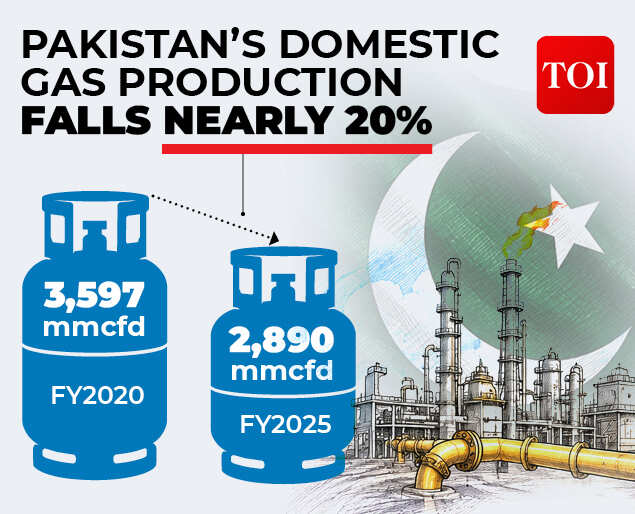
The Pakistan Institute of Development Economics (PIDE), a government-backed research institution, said domestic gas production fell from 3,597 million cubic feet per day in financial year 2020 to 2,890 million cubic feet per day in FY2025. That is a decline of nearly 20% in five years. PIDE attributed the fall to the depletion of mature fields and a failure of new discoveries to replace the lost output.
Pakistan’s domestic gas production falls 20% in five years
The Pakistan Economic Survey 2024-25 offers another snapshot of the pressure on the system. It recorded average gas consumption of 3,143 million cubic feet per day during July-March FY2025, including 798 million cubic feet per day of imported RLNG. Domestic gas remained crucial, but imported supplies were already filling a substantial part of the gap.This is not simply a matter of turning up production. Gas exploration requires investment, time and confidence that companies will be paid for what they produce. PIDE has argued that payment delays, distorted price signals and the financial troubles of state-owned gas utilities have weakened incentives for investment. It has also highlighted the damage caused when domestic production is curtailed to make room for imported LNG.
The LNG paradox: Too little gas, then too much
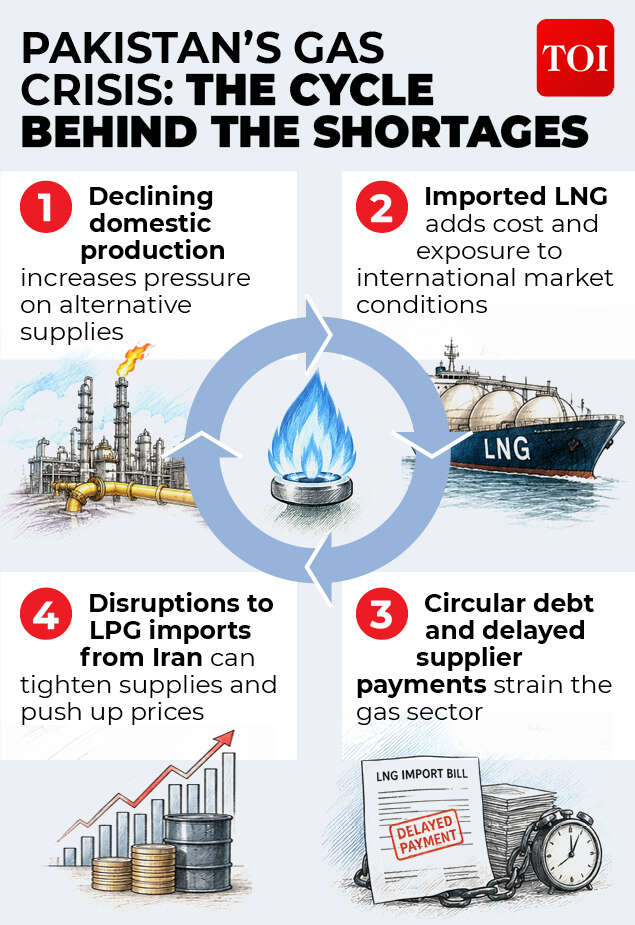
Pakistan began importing LNG in 2015 as domestic production became insufficient. Its supply arrangements include long-term contracts with Qatar, one lasting 15 years and another 10 years, as well as an agreement with Italy’s Eni. These contracts helped secure supplies, but they also reduced the government’s flexibility when demand changed.The problem became particularly visible in 2025. According to the US-based Institute for Energy Economics and Financial Analysis (IEEFA), LNG consumption fell by 1.21 million tonnes that year. Rapid growth in rooftop solar power and weaker demand from the electricity grid contributed to a change in the country’s energy requirements.Yet contracted LNG supplies could not be adjusted easily enough to reflect the fall in demand.That left Pakistan facing an unusual predicament: A country struggling with gas shortages could also have more imported LNG than it needed at particular times.With limited storage capacity, surplus LNG had to be diverted into the domestic network or otherwise managed. But imported gas costs more than much of Pakistan’s domestically produced gas, while household tariffs have often been kept below the full cost of supply.Diverting expensive imported fuel to consumers at lower regulated rates can therefore create losses rather than solve the underlying financial problem.IEEFA estimated that Pakistan’s gas-sector circular debt stood at around PKR 3.3 trillion in its March 2026 assessment. The think tank also said unaccounted-for gas losses, including theft and technical leakages, were estimated at around 11.7% of gas handled.
A financial hole worth trillions
On October 20, Business Recorder reported that federal energy minister Ali Pervaiz Malik had told the National Assembly that Pakistan’s total gas-sector circular debt and outstanding payments to domestic gas and LNG suppliers stood at PKR 5.454 trillion as of June 30, 2026.
Pakistan’s gas circular debt surges due to supply shortages
Of this, circular debt accounted for PKR 3.631 trillion, while outstanding payments to gas suppliers amounted to another PKR 1.823 trillion. The minister said the circular debt included PKR 1.448 trillion in tariff differentials, PKR 131 billion in receivables from power companies, PKR 210 billion in sales and income tax receivables, and PKR 59 billion related to litigation.Circular debt builds up when money owed at one point in the supply chain is not paid on time, preventing the next entity from meeting its own obligations. In Pakistan’s gas sector, the problem has been aggravated by tariff gaps, unpaid bills, delayed payments and the cost of imported fuel.The consequences extend beyond balance sheets. When gas utilities struggle to recover the cost of supply, their ability to pay producers and maintain infrastructure comes under pressure. Producers, in turn, have less incentive to invest in new fields. Consumers may face higher tariffs, restricted supply or both.The IMF’s concerns have continued into 2026. Dawn reported on October 2 that the lender had urged Pakistan to speed up work on targeted gas subsidies and address the sector’s rising circular debt. The report said discussions were under way on shifting support from subsidised tariffs towards direct assistance for eligible low-income households, although data and ownership-related problems made the transition difficult.
Why Pakistan’s govt cannot simply raise prices
Pakistan’s government has tried to balance financial reform with relief for consumers. On January 6, 2026, the Press Information Department reported that petroleum minister Ali Pervaiz Malik had announced, on PM Shehbaz Sharif’s directions, that gas prices would remain unchanged for six months.The minister also said the government had negotiated with Qatar to divert surplus LNG cargoes to international markets while respecting contractual obligations.But holding tariffs steady does not automatically eliminate the gap between what gas costs and what consumers pay. Nor does it address the separate problem of LPG prices in the open market, where supply disruptions can push prices well above the regulator’s notified rate.The Shehbaz Sharif-led government has also considered replacing broad gas subsidies with a single fair price, while protecting vulnerable households through targeted assistance. On August 27, the detroleum division said petroleum minister Ali Pervaiz Malik had urged reforms, including steps to curb gas theft, reduce losses and improve revenue recovery at Sui Southern Gas Company.
The crisis reaches far beyond the kitchen
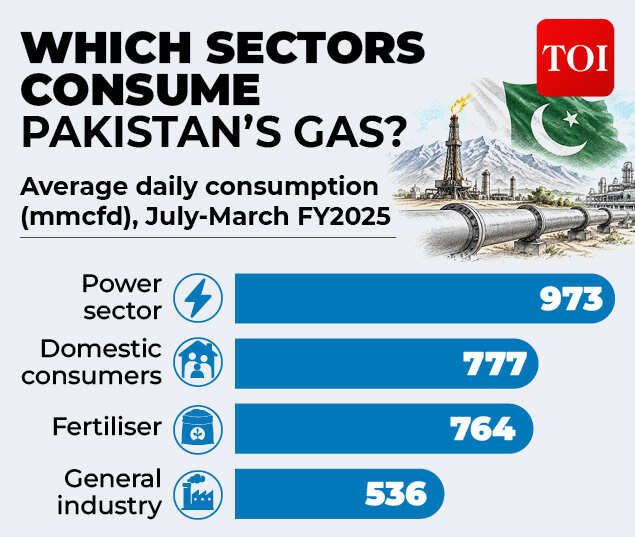
Pakistan’s Economic Survey for 2024-25 recorded average daily gas consumption of 3,143 million cubic feet during July-March FY2025. The power sector accounted for 973 million cubic feet per day, while domestic consumers used 777 million and the fertiliser sector 764 million. General industry consumed another 536 million cubic feet per day.
Power sector, households, fertiliser and industry: Who consumes Pakistan’s gas?
These figures show why gas allocation is such a difficult policy choice. A supply shortfall can affect household cooking and heating, but it can also disrupt electricity generation, fertiliser production and industrial operations.Fertiliser plants are particularly important because their output feeds directly into agriculture. If gas supply or prices disrupt production, the effects can spread through fertiliser availability, farming costs and food prices. Industries that depend on gas for heat, processing or captive power can also face higher costs, potentially weakening competitiveness and investment.Until those structural problems are addressed, temporary relief may ease one winter’s hardship without preventing the next shortage. Pakistan’s gas crisis is bigger than LPG prices because the cylinder is only where a much wider failure becomes visible.