









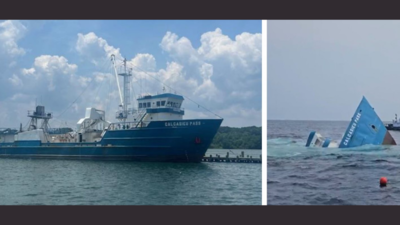
A retired 180-foot commercial fishing vessel was deliberately sunk off the Atlantic coast of Delaware in August 2026 to create an artificial reef. The new reef will provide habitats for marine life and create new locations for recreational diving. The vessel, named the F/V Calcasieu Pass, was sunk on August 12 at Delaware Reef Site 13. The site is about 26 miles offshore from the Indian River Inlet. The ship now rests at a depth chosen to attract different fish species and support ocean biodiversity. According to a press statement from seafood industry group Saving Seafood, the vessel was previously operated by commercial fishing company Ocean Harvesters. In 2024, the company transferred the retired ship to marine contractor Coleen Marine for a symbolic payment of $1. The goal was to turn the vessel into an artificial reef. Coleen Marine handled the preparation, towing and sinking process to ensure the vessel was placed safely and met environmental standards. Before the ship was released into the Atlantic Ocean, crews removed hazardous materials, oil and loose debris as part of the required cleanup.
Second life for retired industrial vessel
The F/V Calcasieu Pass first worked as a supply vessel for offshore oil fields. It was later converted into a commercial fishing boat used to catch menhaden. These small, nutrient-rich fish are mainly used to make fish meal, fish oil and other marine products for industrial use. In an official statement published by Saving Seafood, Ocean Harvesters Chief Executive Officer Monty Deihl discussed how retired ships can continue to help marine conservation efforts. “Retired working vessels can continue to provide value long after their fishing days are over,” Deihl said. “We’re pleased to see the Calcasieu Pass begin a new chapter as marine habitat, supporting the ecosystem while creating new opportunities for anglers and divers.” Artificial reefs provide solid structures on ocean floors that would otherwise be mostly flat and featureless. These steel structures give sport fish and other marine life places to hide, breed and find food. They also support organisms that attach themselves to hard surfaces and species that live on the seafloor.
Monitoring ecosystem impact and fish stocks
State wildlife officials and marine biologists expect the new reef to attract marine life, but monitoring is still underway. Early surveys carried out soon after the sinking have not yet recorded measurable increases in local fish populations at the site. According to Delaware environmental managers, artificial reefs need time to develop into complete ecosystems. Marine life such as algae, barnacles and mussels usually begins growing on the steel hull over several months. This growth can attract smaller fish that serve as prey, followed by larger predatory fish. State environmental agencies monitor artificial reef sites over several years. They track how quickly marine life settles in, whether the structures remain stable and how fish populations in the area change over time.
Delaware expands offshore reef network
The sinking of the Calcasieu Pass adds another site to Delaware’s network of artificial reefs. State authorities manage these reefs along the Atlantic coast and within Delaware Bay. For several decades, Delaware has used retired ships, concrete structures, subway cars and surplus military equipment to expand its artificial reef programme. According to details released by Saving Seafood, using retired menhaden fishing vessels to build reefs follows an established regional practice. In 2020, Coleen Marine prepared and sank another former menhaden vessel, the Reedville, at a Delaware reef site. Similar projects took place off the coast of Mississippi in 2023. Retired fishing boats, including the F/V Mermentau and the F/V G.P. Chauvin, were sunk to strengthen marine habitats along the Gulf Coast. The Delaware Department of Natural Resources and Environmental Control continues to oversee artificial reef projects. The programme aims to support marine biodiversity along the coast, commercial fishing and eco-tourism. Recreational anglers and scuba divers can find the geographic coordinates for Reef Site 13 on state maritime charts. Authorities advise boaters to follow local navigation warnings when visiting the offshore site.