





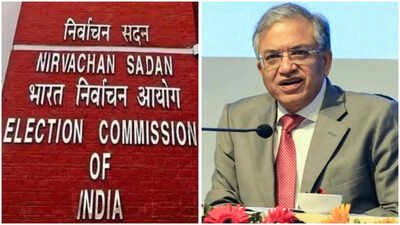
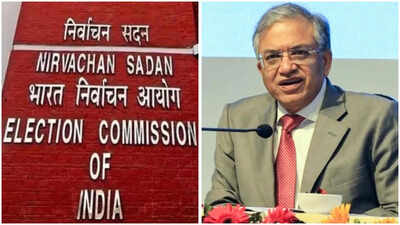
NEW DELHI: It is not the first time that the fault lines within the Election Commission are out in the open. The trend started from the time it became a multi-member body in 1989.Two election commissioners S S Dhanoa and V S Seigell were appointed in October 1989 and joined the poll body then led by chief election commissioner (CEC) R V S Peri Sastri. Though Sastri never publicly spoke about it, it is widely believed that the new arrangement was perceived by him as a dilution in power. By January 1990, the appointment of the two commissioners was rescinded and the EC reverted to being a single—member body.In 1993, with T N Seshan as an all-powerful CEC, the commission was once again made a multi-member body with the appointment of election commissioners M S Gill and G V G Krishnamurthy. What followed was a running feud between Seshan on the one hand and Gill and Krishnamurthy on the other. Seshan viewed the appointments as a direct assault on the independence of his office and completely refused to recognize the two new commissioners. He refused to share official documents with Gill and Krishnamurthy, barred them from attending critical meetings, and would not allocate them any office work. He openly ridiculed the election commissioners in interviews, even referring to them as “two donkeys in my office”.Interestingly, it was on Seshan’s plea challenging the govt’s decision to make EC a multi-member body that the Supreme Court had, in 1995, ruled that the election commissioners and CEC were equal in status, power and decision-making authority and that the CEC was only “first among equals”.The other internal feud in EC to recall would be one between then CEC N Gopalaswami and election commissioner Navin Chawla between 2006 and 2009. Months before he was to step down upon the end of his tenure, Gopalaswami wrote to the President of India recommending the removal of Chawla on grounds of a pro-Congress bias. In his note to the President, Gopalaswami alleged that Chawla was passing on details of EC’s meetings to senior Congress leaders, often taking “toilet breaks” during commission meetings to do so. Gopalaswami’s recommendation was however turned down by the Manmohan Singh govt and Chawla succeeded him as CEC.During the 2019 general election, the differences between then CEC Sunil Arora and then election commissioner Ashok Lavasa came to the fore, with media reports alleging that he had dissented in cases relating to complaints of alleged model code of conduct violations by Prime Minister Narendra Modi and then BJP president Amit Shah, but was overruled without the commission making his dissent noted public. EC put out a clarification that dissent notes were only made public in quasi-judicial orders passed by EC.
Share your thoughts in the comments
Be respectful · TOI community guidelines
Lavasa resigned on August 18, 2020, two years short of his tenure, and joined the Manila-headquartered Asian Development Bank (ADB) as its Vice-President.Arun Goyal was the last election commissioner to quit in the middle of his term. Though he had cited personal reasons in his resignation dated March 9, 2024, it was widely speculated that he was not on the best of terms with the then chief election commissioner Rajiv Kumar.