









NEW DELHI: “All protests are one,” Congress leader Rahul Gandhi declared on Wednesday as opposition parties rallied behind two Cockroach Janta Party (CJP) leaders sent to judicial custody following demonstrations against Chief Election Commissioner Gyanesh Kumar.CJP founder Abhijeet Dipke welcomed Rahul’s support, thanking the Congress leader for standing with the arrested protesters.Just days ago, that was hardly how things looked on Delhi’s streets, where Congress and CJP appeared to be competing for space and prominence while leading separate campaigns against alleged irregularities in the Special Intensive Revision (SIR) of electoral rolls.The Congress-led INDIA bloc was organising its own demonstrations, while CJP, which had mobilised thousands of protesters in July, prepared separately for Jantar Mantar 2.0 on October 10.AAP, TMC and the Left were willing to join CJP’s agitation, but Congress kept its distance. Their objective was the same, but they were fighting for it separately. Many wondered why.On October 10, the Delhi police enforced an unprecedented clampdown in the national capital to prevent mobilisation for CJP’s Jantar Mantar 2.0. Thousands of protesters were dragged on the streets and detained.
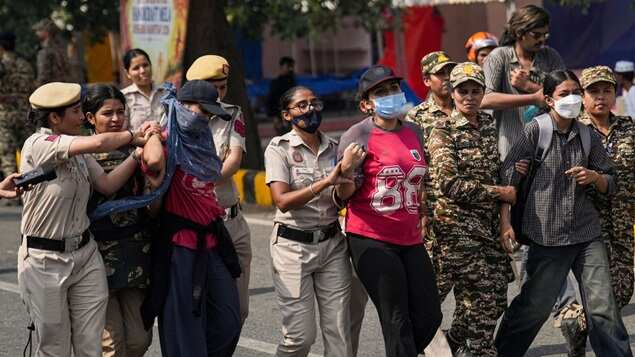
Delhi Police detained more than 3,000 people attempting to reach Jantar Mantar for the protest.
Such was the intensity of police action that the CJP stir could not even take off. The top CJP leaders were arrested from a plane on landing in Delhi, drawing flak from some quarters for their easy “surrender.” Several political parties stood with the cockroaches, but the Congress stayed away.The trigger for greater unity came after CJP leaders Saurav Das and Ashutosh Ranka were arrested on October 14 following their attempt to protest at Jantar Mantar by waving the Tricolour. Rahul Gandhi came out in open support for first time, and CJP founder Abhijeet Dipke thanked him.
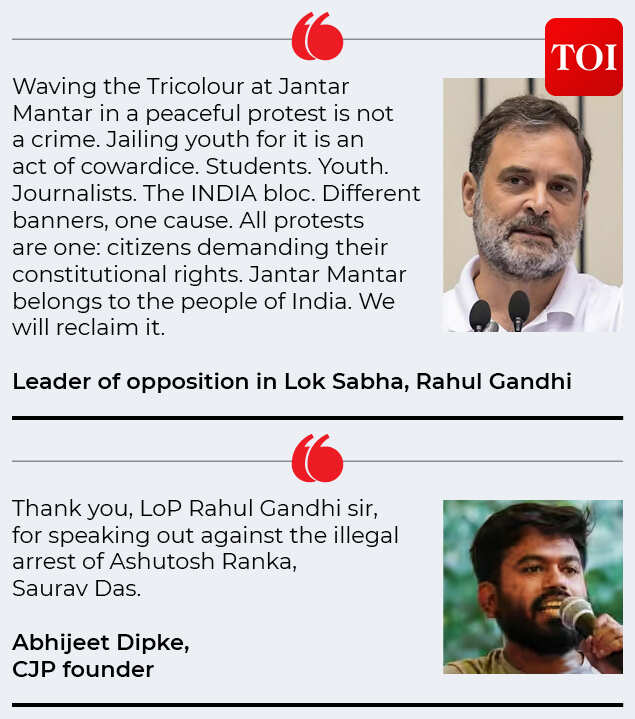
What Rahul Gandhi said after CJP leaders were arrested.
The dynamics now seem to be changing, with Congress and CJP more willing to support each other, if not formally join forces. But why? Have both sides realised the limitations of organising separate protests for the same cause? Let’s decode this shift.
From NEET protests to Jantar Mantar 2.0
In June, when CJP protested against the NEET paper leak and demanded the resignation of then Union education minister Dharmendra Pradhan, Congress stayed away. Rahul was leading his own programme, Chhatron Ki Goonj, on similar issues.AAP, the Left and social activists joined CJP at Jantar Mantar. The movement gained momentum with Sonam Wangchuk and AISA leader Neha Bora sitting on an indefinite fast. But Congress continued to stay away.On July 20, Delhi Police launched a major operation against students and young protesters who had reached the capital on CJP’s call. The next day, Rahul joined the agitation and staged a sit-in outside Prime Minister Narendra Modi’s residence, shifting Congress’s focus from its own campaign.
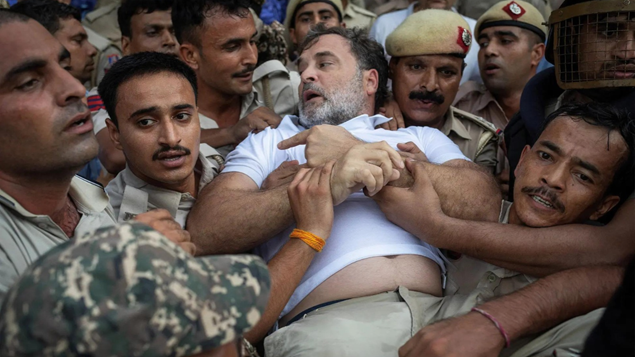
Police personnel restrain Congress leader Rahul Gandhi during a protest near PMO
However, with the government entering negotiations with CJP and later accepting its demands, including Dharmendra Pradhan’s resignation, Congress was left on the sidelines.The anti-paper leak protests were perhaps a wake-up call for political parties, especially Congress, as large numbers of young people mobilised behind CJP. Prime Minister Modi subsequently turned to Instagram to reach out to Gen Z, while other parties were left to rethink their youth outreach.
The SIR and ‘vote chori’ campaign
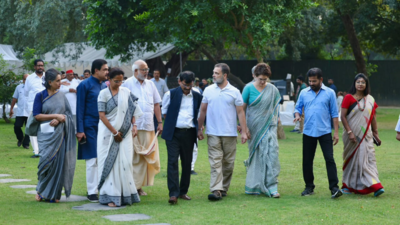
Congress had been at the forefront of the ‘vote chori’ campaign, with Rahul holding press conferences highlighting alleged discrepancies in electoral rolls. The party also led a yatra in Bihar ahead assembly elections in the state.The momentum gradually faded, before an Indian Express report on differences within the Election Commission over SIR returned the issue to centre stage. CJP took up the issue, organising a Mumbai rally and setting an October 10 deadline for Gyanesh Kumar’s resignation, failing which it called for Jantar Mantar 2.0.Congress and the INDIA bloc also stepped up their campaign, announcing a six-point action plan that included an October 6 street protest. With CJP’s mobilisation approaching, INDIA bloc leaders returned to the streets for four consecutive days until October 9, perhaps keen not to be left on the sidelines again. But on October 10, the D-day of CJP mobilisation, Rahul was in Chennai and the Congress stayed away.Another change had taken place between July and October. Civil society groups and activists associated with CJP’s earlier movement were now actively participating in the INDIA bloc’s SIR campaign.The most prominent was Neha Bora, national president of the All India Students’ Association (AISA). During the October 12 march towards the Supreme Court, Rahul walked with his hands on the shoulders of Bora and Priyanka Gandhi, with senior opposition leaders following behind.
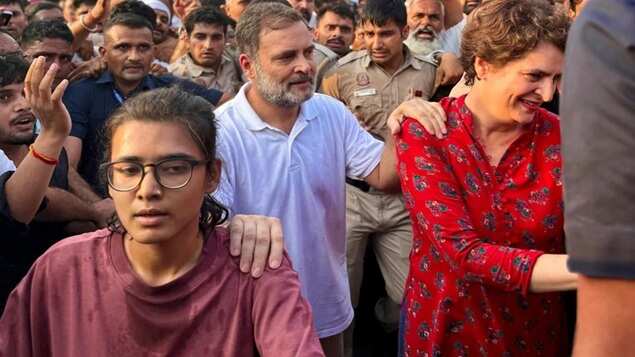
Congress leaders Rahul Gandhi and Priyanka Gandhi Vadra, along with student leader Neha Bora, during INDIA bloc’s anti-CEC protests.
The moment appeared to signal Congress’s willingness to bring prominent youth protest faces into its campaign. Political analyst Uday Chandra explained the significance of this shift.“Congress under RG recognises that youth-led protests have mobilised ordinary people beyond the reach of traditional party organisations. Neha Bora is an interesting bridge between these worlds, though she leads AISA, a Left student organisation, not CJP,” Chandra said.He also pointed to a shift in student politics. “What I find most interesting is that AISA and NSUI are fighting together today. This wasn’t the case in the past,” he said.
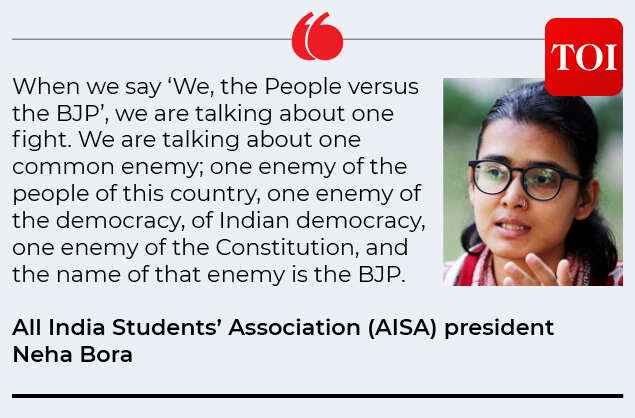
AISA president Neha Bora calls for a united fight against the BJP
As CJP leaders’ arrests drew support across party lines, this cooperation was no longer limited to student organisations.
Opposition closes ranks
The support for CJP has not come from Congress alone.TMC leader Mamata Banerjee condemned the arrests as an attempt to intimidate young protesters. Party MP Abhishek Banerjee accused the BJP of arresting people for waving the national flag, calling it “BJP’s new Pakistanified Bharat”. Mahua Moitra also expressed solidarity.AAP chief Arvind Kejriwal questioned whether waving the Tricolour could be a crime. DMK president MK Stalin offered legal assistance to the two CJP leaders, while NCP(SP)’s Supriya Sule and Shiv Sena (UBT)’s Aaditya Thackeray condemned the arrests.The Left maintained its support. Former Kerala chief minister Pinarayi Vijayan criticised the arrests. CPI general secretary D Raja called the police action undemocratic and said his party’s student and youth organisations would intensify their campaign for the right to protest at Jantar Mantar.
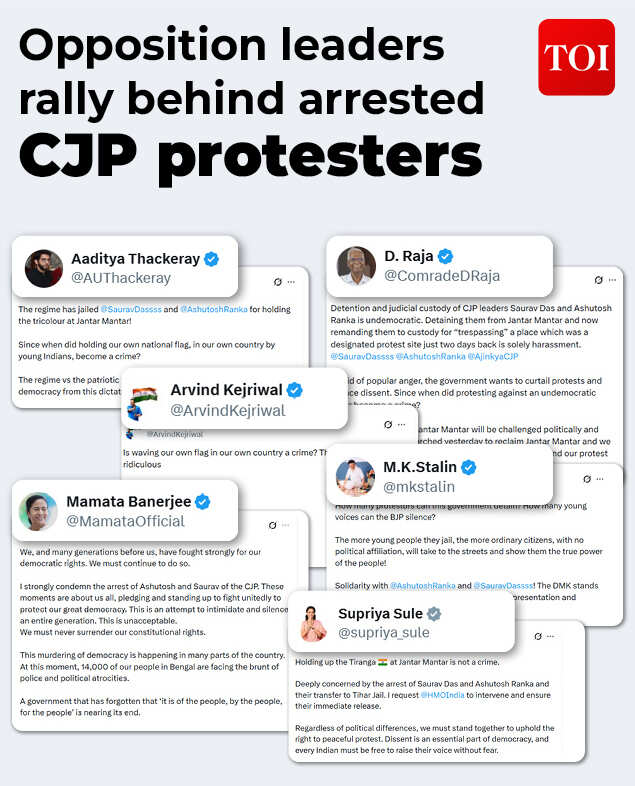
From Mamata to Kejriwal, opposition leaders back arrested CJP leaders
The growing opposition presence was visible beyond Delhi. On Thursday, Vijay’s Tamilaga Vettri Kazhagam (TVK), which had stayed away from earlier anti-CEC demonstrations, joined a Congress-led INDIA bloc protest in Chennai. TVK had joined the alliance on October 3; leaders from VCK, MDMK and other partners also participated.More protests may follow. NCP(SP) spokesperson Anish Gawande said Rahul had asked INDIA bloc leaders to be prepared for further demonstrations at 24 hours’ notice.These parties have their own priorities and have not always followed the same protest programme. Yet, from Delhi to Chennai, more opposition leaders are speaking out on the same issue. CJP and the INDIA bloc, however, have not announced any joint protest programme.
The counter
The BJP has rejected the opposition’s allegations, accusing rivals of using street demonstrations to question democratic institutions after electoral defeats.On October 10, BJP MP Ravi Shankar Prasad said: “We are not opposed to protests, but you have weaponised street protests because of your electoral defeats.”BJP spokesperson Sambit Patra also questioned whether events at Jantar Mantar represented the larger picture of India. The Election Commission has denied allegations of political bias in electoral-roll revision.
Together, but still separate?
For CJP, opposition support presents an opportunity and a challenge. The group has built its identity as an independent youth-led movement, but the detention of its leaders and criticism of its leadership raise questions about sustaining the agitation without established parties.Uday Chandra cautioned against reading too much into the cooperation.“There is certainly a convergence of interests at this moment, but we should not mistake that for anything akin to a formal alliance. The police crackdown and detention of protesters have created a common cause for the CJP and the INDIA bloc,” Chandra said.He noted that CJP’s independence has been central to its youth appeal and that its leaders have criticised the opposition in the past.Political commentator Sugata Srinivasaraju questioned whether CJP had established a support base strong enough to sustain a larger movement. He warned that becoming an extension of Congress could cost it its independent identity. Nor was it clear whether CJP would lead any joint campaign or give way to a larger party.For Congress, CJP’s ability to mobilise young people is attractive. But could closer cooperation undermine the independence that made those movements appealing in the first place?Chandra warned: “The autonomy of these youth movements is precisely what makes them politically significant. If parties or their student unions undermine that autonomy, the movement may splinter amidst loud bickering, and can even fizzle out following discord.”CJP founder Dipke has maintained that the group will remain an independent pressure group, despite sharing the opposition’s demand for Kumar’s removal.
Has the opposition finally found its feet?
The INDIA bloc has struggled to present a united front since its inception. Disagreements over leadership, seat-sharing and political priorities have divided parties, and Congress has faced criticism over its lack of efforts to keep the coalition together.The protests against the CEC have offered a different picture: common ground emerging from demonstrations rather than electoral negotiations. Differences remain, however. AAP and DMK, once part of the INDIA bloc, are still not ready to join hands with Congress.But does a greater presence on the streets mean the opposition has finally found its feet?Sugata Srinivasaraju disagreed that the opposition had been missing in action. Parties, he argued, had always been active, even if street demonstrations had recently become more frequent.“More frequent protests do not necessarily mean a more effective opposition. Without planning, structure and a clear strategy, such demonstrations can become counterproductive, with little lasting political impact,” he said.He also questioned what the prominence of youth leaders from outside Congress said about its leadership.
Share your thoughts in the comments
Be respectful · TOI community guidelines
“It also reflects the opposition’s inability to lead itself and absence of strong, charismatic leaders of its own. By bringing in faces from youth-led movements, it is, in a way, acknowledging that leadership gap. But there is a risk that leaders like Neha Bora could lose their independent identity within a larger political organisation, much like what happened with Kanhaiya Kumar,” he said.The coming together of opposition parties has changed the picture on the streets, but questions remain over whether they can sustain protests, develop new leaders and turn a common cause into a coordinated campaign.For years, the question has been: Where is the opposition? With parties now finding common ground after months of differences, could that question finally have an answer?